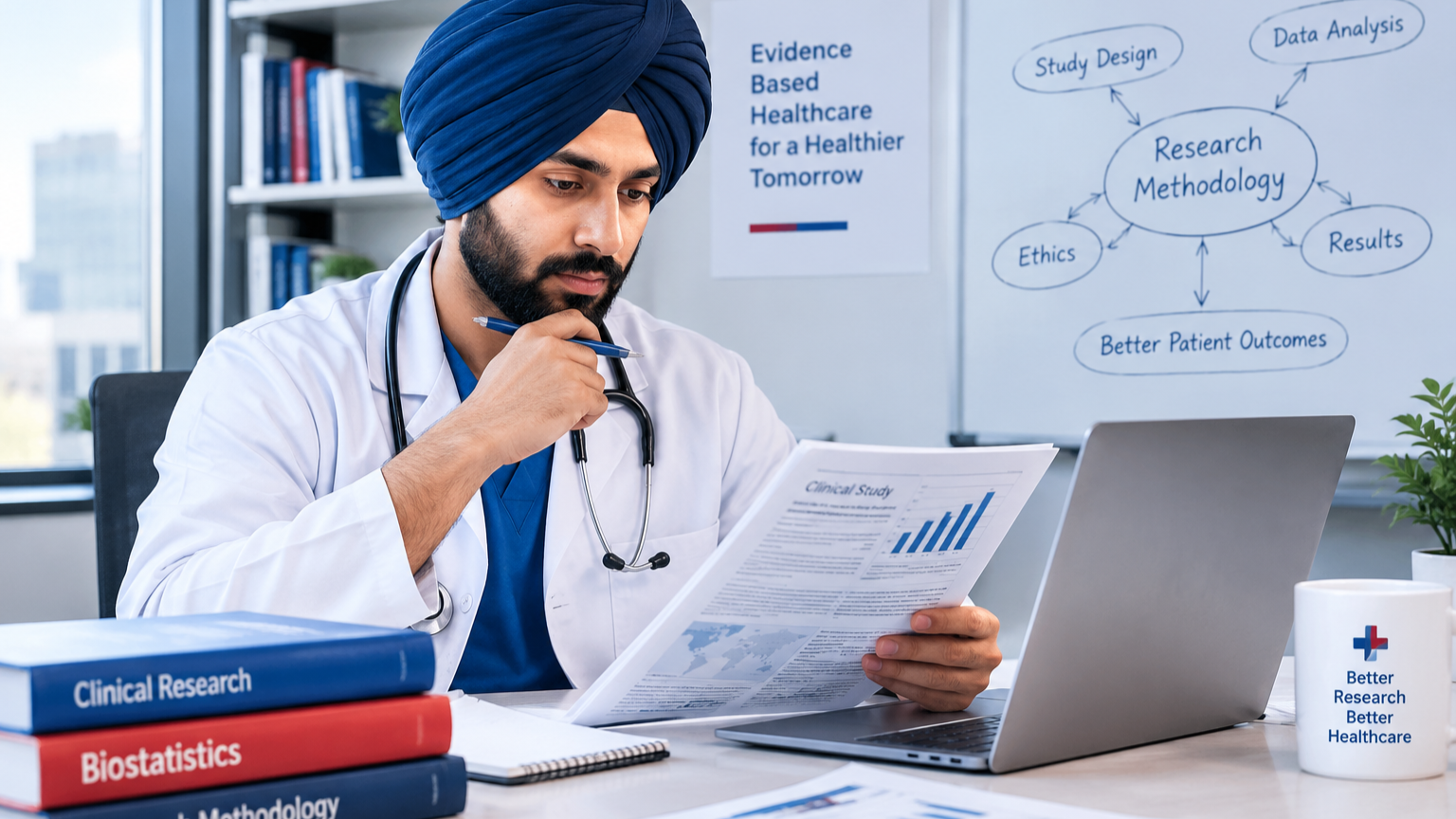
Explore research methodology courses for healthcare professionals. Learn about clinical research, biostatistics, research ethics, study design, and online training options.
# Research Methodology Courses for Healthcare Professionals: A Complete Guide
Healthcare is constantly evolving through scientific discoveries, clinical trials, and evidence-based medical practices. For healthcare professionals who want to improve patient outcomes, advance their careers, or contribute to medical research, understanding research methodology is an essential skill. Research methodology courses for healthcare professionals provide the knowledge and practical tools needed to design studies, analyze data, interpret scientific findings, and apply evidence to real-world healthcare decisions.
Whether you are a doctor, nurse, pharmacist, medical student, public health professional, or clinical researcher, learning research methodology can help you evaluate medical evidence and contribute to the development of better healthcare practices.
In this guide, we explore what research methodology courses cover, who should consider taking them, their benefits, and how to choose the right course for your professional goals.
What Are Research Methodology Courses for Healthcare Professionals?
Research methodology courses teach learners how to plan, conduct, evaluate, and report scientific research. In healthcare, these courses focus on the methods used to investigate diseases, evaluate treatments, assess healthcare services, and improve patient safety.
Unlike general research courses, healthcare-focused programs often address clinical research, epidemiology, biostatistics, evidence-based medicine, research ethics, and the interpretation of medical literature.
Depending on the program, students may learn how to develop research questions, select suitable study designs, collect reliable data, conduct statistical analyses, and communicate their findings through scientific reports or journal publications.
These courses are available in different formats, including online self-paced programs, university certificates, workshops, and postgraduate qualifications.
Why Is Research Methodology Important in Healthcare?
Healthcare decisions can have significant consequences for patients. Research methodology helps professionals distinguish reliable scientific evidence from unsupported claims and understand the strengths and limitations of published studies.
Here are some important reasons to learn healthcare research methodology.
1. Improve Evidence-Based Practice
Evidence-based healthcare combines the best available research evidence with professional expertise and patient preferences. Research methodology helps healthcare professionals assess whether a study provides reliable evidence to support a clinical decision.
2. Understand Clinical Trials
Clinical trials evaluate the safety and effectiveness of medical interventions, including medicines, vaccines, and medical devices. Understanding trial design, randomization, control groups, and bias helps professionals interpret clinical trial results more accurately.
3. Develop Scientific Research Skills
Professionals interested in academic medicine, pharmaceutical research, public health, or clinical investigation can benefit from learning how to formulate research questions, design studies, and interpret findings.
4. Strengthen Critical Appraisal Skills
Not every published study provides strong evidence. Research methodology training helps learners evaluate study limitations, sample sizes, statistical significance, potential bias, and the relevance of findings to specific patient populations.
5. Support Career Development
Research skills can be useful for healthcare professionals pursuing careers in clinical research, academia, pharmaceutical development, public health, medical writing, and healthcare quality improvement. However, individual roles may require additional qualifications or practical experience.
What Do Healthcare Research Methodology Courses Cover?
The curriculum varies by institution and course level, but comprehensive programs commonly include the following subjects.
Research Design and Methods
Learners explore qualitative, quantitative, and mixed-methods research. They study observational designs, cross-sectional studies, cohort studies, case-control studies, and randomized controlled trials.
Understanding these methods helps researchers select an appropriate design for a particular research question.
Biostatistics and Data Analysis
Biostatistics helps researchers analyze healthcare data and determine what study results mean. Course topics may include descriptive statistics, probability, confidence intervals, hypothesis testing, p-values, statistical power, and regression analysis.
Some courses also introduce statistical software or tools used to organize and analyze research data.
Clinical Research and Clinical Trials
Clinical research modules may cover trial protocols, participant recruitment, randomization, blinding, outcome measures, safety monitoring, and clinical trial reporting.
These subjects are particularly relevant to physicians, pharmacists, clinical research coordinators, and professionals working in pharmaceutical research.
Research Ethics and Informed Consent
Ethical research protects the rights, safety, dignity, and privacy of participants. Students may learn about informed consent, confidentiality, research integrity, conflicts of interest, and institutional ethics review.
Programs involving human participants should also address relevant ethical standards and applicable local regulations.
Literature Review and Scientific Writing
A literature review identifies and evaluates existing research on a specific topic. Healthcare professionals can learn to search academic databases, assess the quality of publications, identify research gaps, and structure scientific manuscripts.
Some programs introduce systematic reviews, meta-analysis, referencing methods, and publication ethics.
Epidemiology and Public Health Research
Epidemiology examines the distribution and determinants of health conditions in populations. Training in this area can help professionals investigate disease patterns, evaluate risk factors, interpret population-level data, and assess public health interventions.
Who Should Take Research Methodology Courses?
Research methodology training can benefit healthcare professionals at different stages of their careers.
Medical students and doctors: Develop skills for dissertations, clinical research, postgraduate study, and evidence-based practice. Nurses: Learn to evaluate clinical evidence and participate in nursing research and quality improvement. Pharmacists: Understand clinical trials, drug safety studies, pharmaceutical research, and evidence evaluation. Public health professionals: Strengthen skills in epidemiology, population health studies, and program evaluation. Clinical research coordinators: Build knowledge of study protocols, participant management, data collection, and research documentation. Medical and scientific writers: Improve their ability to interpret studies and communicate scientific findings accurately. Healthcare administrators: Learn how research evidence can inform service evaluation, patient safety initiatives, and healthcare policy.
The most suitable course depends on your existing qualifications, experience, and intended career path.
Best Types of Research Methodology Courses for Healthcare Professionals
There is no single course that suits everyone. Consider the following options according to your goals.
1. Beginner-Level Online Courses
These courses introduce research questions, study designs, literature searches, and basic statistics. They are suitable for students and professionals who are new to scientific research.
2. Clinical Research Courses
Clinical research courses focus on the planning and conduct of studies involving patients or other human participants. Look for relevant content on research ethics, clinical trial protocols, participant safety, and Good Clinical Practice (GCP).
3. Biostatistics Courses
Biostatistics programs are useful for learners who want to understand medical data, interpret statistical results, or conduct quantitative research.
4. Systematic Review and Meta-Analysis Courses
These courses teach structured approaches to identifying, assessing, and synthesizing existing scientific evidence. They may be particularly useful for postgraduate students, academic researchers, and evidence-based medicine practitioners.
5. University Certificates and Postgraduate Programs
Universities may offer formal certificates, diplomas, master's-level modules, or postgraduate qualifications in clinical research, epidemiology, public health, or health research methodology.
These programs may provide deeper training, supervised projects, or academic recognition. Admission requirements, accreditation, and recognition vary by institution.
How to Choose the Right Research Methodology Course
Before enrolling, evaluate the course carefully to ensure it matches your learning objectives.
Check the curriculum: Choose a course that covers the subjects you need, whether clinical trials, biostatistics, research ethics, or scientific writing.
Verify the provider: Review the institution's reputation, instructor qualifications, and the recognition of any certificate offered.
Look for practical training: Research projects, case studies, data-analysis exercises, and critical appraisal assignments can help you apply theoretical knowledge.
Compare cost and flexibility: Online courses may offer self-paced learning, scheduled classes, or instructor-led sessions. Compare tuition, access periods, assessment requirements, and any additional fees.
Review the certificate: Determine whether the certificate demonstrates course completion, academic credit, or a formally recognized qualification. These are not necessarily equivalent.
Consider your career goals: A basic research course may be enough to strengthen your understanding of medical literature, while independent clinical research may require more extensive education, supervised experience, and regulatory training.
Are Online Research Methodology Courses Worth It?
Online research methodology courses can be a convenient way to develop scientific skills while balancing clinical responsibilities, academic commitments, or full-time employment.
Their value depends on the quality of the curriculum, the relevance of the material, and opportunities to practice what you learn.
For example, a pharmacist interested in clinical research may benefit from a course covering trial design and GCP, while a medical student preparing a dissertation may prioritize research design, biostatistics, and scientific writing.
Before paying for a course, review its learning outcomes, instructor credentials, assessment methods, and certificate conditions. Free introductory courses can also help you determine whether a subject meets your needs before committing to a paid program.
Frequently Asked Questions
What is the best research methodology course for healthcare professionals?
The best course depends on your professional background and goals. Beginners may prefer an introductory health research course, while clinical researchers may need more advanced training in clinical trials, biostatistics, and research ethics.
Can I learn research methodology online?
Yes. Many universities and educational platforms offer online courses covering healthcare research design, statistical methods, literature reviews, and clinical research. Course quality and certificate recognition vary.
Do I need a medical degree to study healthcare research methodology?
Not necessarily. Many introductory courses are open to students and professionals from different academic backgrounds. Advanced programs may have specific admission requirements.
How long does a research methodology course take?
Duration varies from short workshops and self-paced modules to semester-long university courses and postgraduate programs. Check the provider's published schedule before enrolling.
Are research methodology courses useful for pharmacists?
Yes. These courses can help pharmacists understand clinical trial evidence, evaluate medication studies, interpret safety data, and develop research skills relevant to pharmaceutical practice.
Can a research methodology certificate help me get a clinical research job?
It may strengthen your knowledge and demonstrate relevant training, but it does not guarantee employment. Employers may also require a relevant degree, practical experience, knowledge of GCP, and familiarity with applicable regulations.
Are free research methodology courses available?
Yes. Some universities and educational platforms provide free learning materials or courses. However, graded assessments, instructor support, or certificates may require payment.
Conclusion
Research methodology is an important skill for healthcare professionals who want to understand scientific evidence, contribute to medical research, and support better healthcare decisions. By enrolling in suitable research methodology courses for healthcare professionals, learners can develop knowledge of research design, biostatistics, clinical trials, research ethics, and scientific writing.
The right course should match your professional goals, provide a reliable curriculum, and offer opportunities to apply your knowledge in practical situations.
At Batool Pharmaceuticals, our goal is to make pharmaceutical and healthcare knowledge easier to understand. Continue exploring our educational resources to strengthen your understanding of medical science, research, and evidence-based healthcare.
Start with your learning goals, compare reputable course providers, and choose a program that helps you turn scientific knowledge into practical skills.
Sources
- National Institutes of Health (NIH)
- Cochrane
No corrections to date. If you can show me I am wrong, with a source, it gets fixed here and dated — send it over.